
By Maria Luiza Montejano Pedrosa
As human beings, our bodies are constantly undergoing major changes, affecting not only the daily routine we have grown accustomed to but also our sense of self and emotional state. But what happens if unexpected circumstances are added to this never-ending circle, taking the capacity for physical control?

The World Health Organisation published its global report on health equity for persons with disabilities in 2022, which found that an estimated 1.3 billion people experience significant disability, which at the time made up 16.25% of the population, and although an updated report is yet to be published, it is indubitably certain that this number has grown over time. After the pandemic, studies have also found a higher increase of long-term COVID-19 symptoms, with many patients left with sequelae and impediments caused by the virus that have drastically changed their lives. Simple tasks can become unbearable; independence that is rooted in principle is also gone. Evolving to adapt to this new cycle makes it necessary.
It is inevitable to wonder what could be done to improve the lives of these individuals who have learned to be hyper-independent, creating their own community and effecting the changes they were tired of begging society for. The history of disabled activism has gone beyond the creation of regulations like the Disabled Act, being recognised by the United Nations, or even designing their own clothing and entering spaces that once seemed impossible or simply inaccessible.
What is Accessibility?
In broad terms, accessibility is the vital act of ensuring physical and online environments are designed for individuals of all abilities to navigate freely and independently. There are different methods and components that achieve the same result: making everyday tasks possible for all. Physically, that could come in the form of ramps that replace stairs or automatic doors that open with no struggle at the touch of a button, while in the virtual world, tools like audio descriptions and captions were introduced and improved as the internet evolved.
The term ‘Disabled’ has been used since the mid 1700’s, defined then by weakness or incapacity before being associated with “A physical or mental condition that limits a person’s movements, senses, or activities; (as a mass noun) the fact or state of having such a condition” as defined by the Oxford English Dictionary. The term has now taken on a new meaning with the embrace of visible and hidden disabilities, recognised by the community that welcomes everyone with open arms and by law.
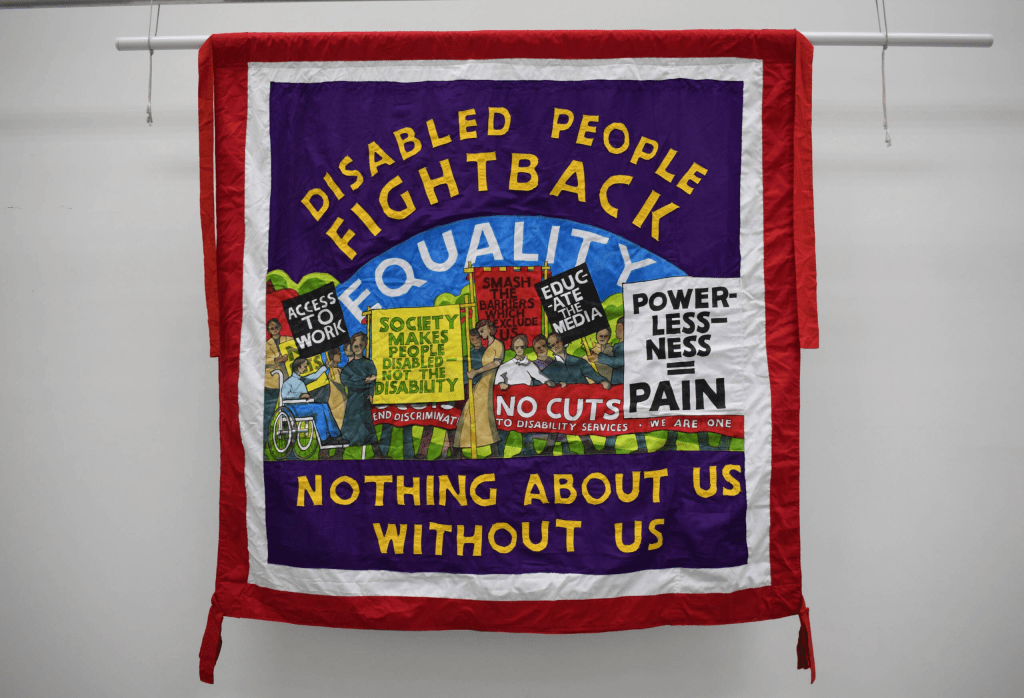
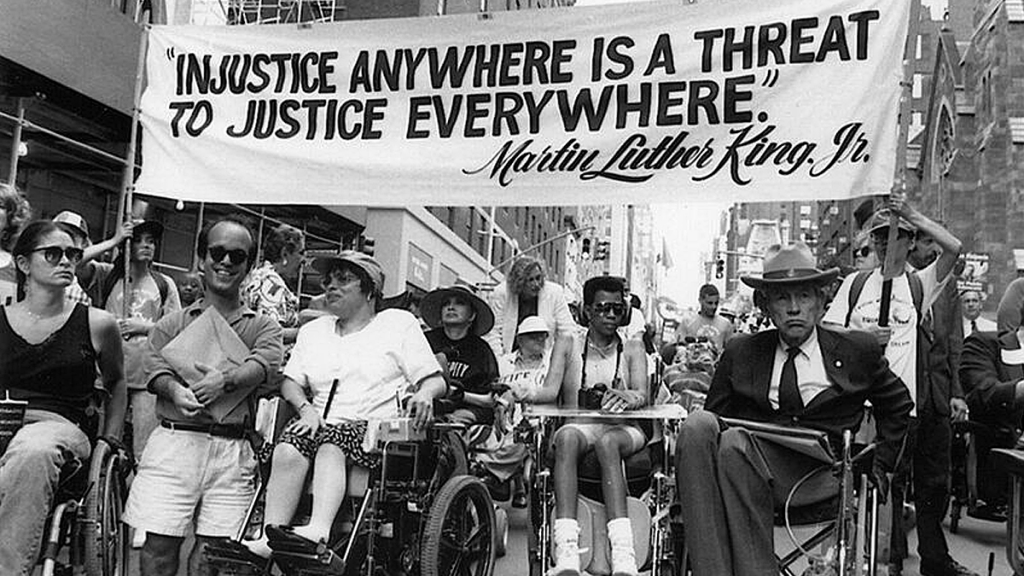
While disabled people always existed, it was thanks to their own protests that their rights were recognised worldwide. Historically in the UK, disability rights have been fought for ever since feudal times. In a post World Wars Britain, working and welfare schemes were put in place for all after the 1944 Disabled Persons Employment, The National Health Service and the National Assistance Acts in 1948 that initiated a new wave of tools like the ‘Articles for the Blind’ done in a partnership with the Royal Mail that offers a vary of articles in Braille, the alphabetical system created by Louis Braille to beneficiate visually impaired individuals. In the 1980s and 90s, the academic curriculum changed completely with the introduction of British Sign Language for deaf pupils after the Building (Disabled People) Regulations of 1987 were installed, moving all the way to the Equality Act of 2010, which replaced previous anti-discrimination laws with a single act.
In fashion, this can be incorporated by both the use of practical tools like long-handled shoehorns, button hooks or dressing sticks that can aid for someone who has difficulties with dressing up in ordinary designed clothing as well as by the use of adaptive clothing, which, in a nutshell, is “Clothing designed with modifications that make it easier to wear for people living with health conditions and disabilities. These modifications aim to improve comfort, independence, and ease of dressing for people who may have challenges with mobility, dexterity, or sensory sensitivity”, as told by Kerry Martin, who is responsible for the digital marketing release of Primark’s own adaptive line.
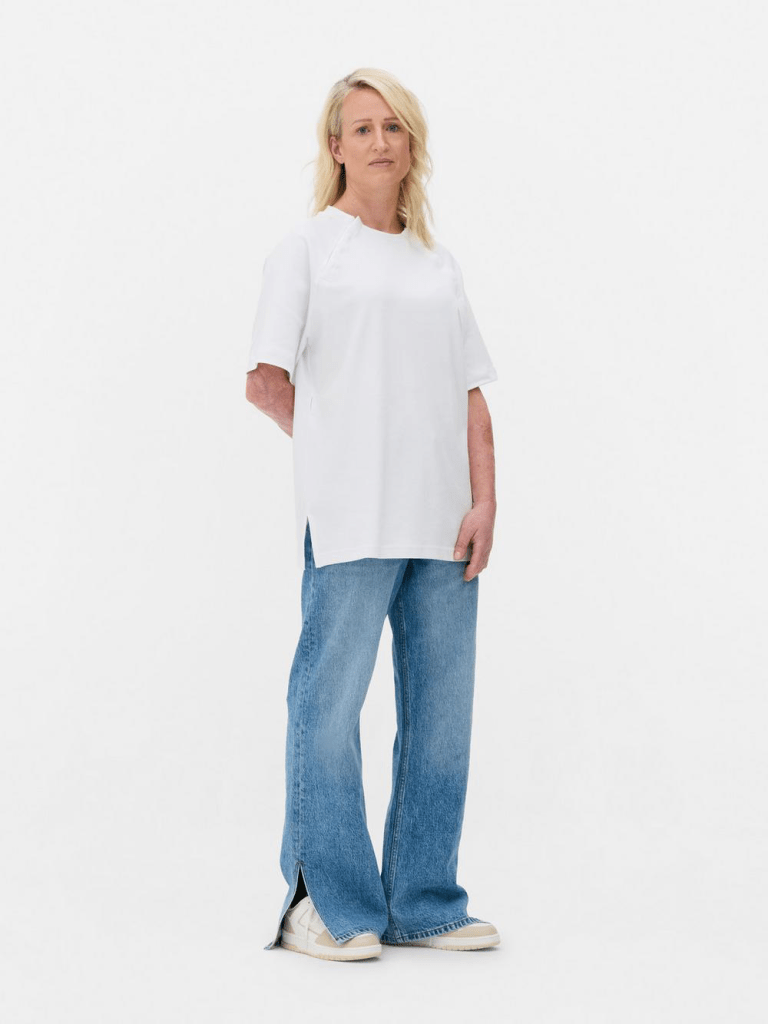
Though the Irish-born fast fashion company is not the first to incorporate inclusiveness in its repertoire, as similar initiatives were seen at Marks and Spencers and Asda, it was indeed a considerable step for UK retailers that more often than not did not compare. The designs were made by Victoria Jenkins, founder of Unhidden, an inclusive brand whose mission is to “Design stylish, comfortable clothing with unique features to allow her community to express themselves through fashion; creating equity for the disabled and chronically ill communities”, Jenkins defined.
This can be done in many ways: by tailoring or custom-making a design that fits someone’s body, a service that can cost more money and time, as well as requiring a professional who is specialised in sewing, or by buying already-made adaptable pieces that feature modifications intended to ease the fitting and daily wear for all users. Think of dresses with tens of little buttons that are modified to open back gowns or easy-to-open velcro, jeans that have built-in hook mechanisms made of fabric to assist with pulling and dressing, tops with wrapping closure to allow access to tubes or other equipment instead of tight t-shirts, and even smooth fabric trousers that help with sensory sensibility.
Geisa Soveign, a personal stylist, has had years of experience with a wide range of clients from everywhere but she remembers working with Samantha Bullock, founder of Bullock Inclusion, and developing tools to ease the act of getting dressed every day and maintaining personal style “I worked with them for 3 years, her runway shows focused on diversity so there were pieces for those plus size, special pieces for those with Parkinson’s disease and so on. She often worked with fashion students. I remember them making clothes without buttons or with magnetic ones for those who had issues with closing buttons due to age or a condition, and they were very fashionable but always maintained functionality” she said.
” They created QR code labels for visually impaired people to use their phones to describe how the clothes were, their size and anything else, so they didn’t need to ask for help. The feedback for those was positive, especially for people who lived by themselves. I remember them saying that they used to mix all clothes in the laundry so they would get stained, but now with the QR codes, they could separate them properly,” she remembered happily. A true trailblazer, Bullock has been working since 2020 with the mission of making fashion more accessible for all by promoting events during London Fashion Week and online campaigns to discuss the serious matter.
From casual to black tie, the importance of having clothing that is made with your body and requirements in mind is an indispensable right because it deals with more than the quality of living, but with how you view yourself, security, and self-esteem. The pressure of living in a society that often praises thin bodies, hence the rise in weight loss drug sales for patients who do not need them, makes for a disastrous outcome, as women are more often than not criticised for their bodies.
This is something Fernanda Parada Aleixo, a content creator with a focus on bringing awareness to weight loss surgery and recovery, knows quite well: “I’m 44 years old, and around age 22, I started gaining a lot of weight. I was constantly on very restrictive diets, always starting on Mondays and giving up shortly after. My father is an endocrinologist, so the pressure became intense, not only from my family but also from my father’s patients. This frustrated me a lot to the point that I started using medication on my own. I would lose weight, but the rebound effect would come back with a vengeance. I moved to London, where the culture of having an extremely thin body is strong, and I started suffering bullying from my boss to the point that I looked for a hospital in Turkey on Instagram, and in less than a month, I was having surgery,” she said.
“A year after my surgery and complementary treatments, I had to learn to live with the distorted body image and the consequences of the surgery. Having lost 80 kilos left a lot of excess skin. Today, after 4 years, I can cope very well, and I would definitely do it all again. I had forgotten what it was like to go into a store and choose clothes I liked instead of buying clothes that fit. I stopped feeling embarrassed in stores when they told me they didn’t have clothes in my size. I started feeling beautiful again, dressing up again, and realising that the way people treated me had changed,” she continued.
Although it is right to assume that adaptive clothing is only made inherently for individuals with restrictions, disabilities, and any other limiting body conditions and sensitivities, it is also fair to consider that all humans will eventually benefit from it, as it is also maternity clothing, hospital gowns, and post-operative items, as well as geriatric-friendly clothing. While common inventions like the zipper in 1913 by or the velcro by George de Mestral in 1941 benefit all of us, there is a particular need for these items to be featured in adaptable clothing as they are the vital pieces in this puzzle, but it goes beyond that.
From Hospitals to Runways: The Fascinating History of Adaptive Fashion
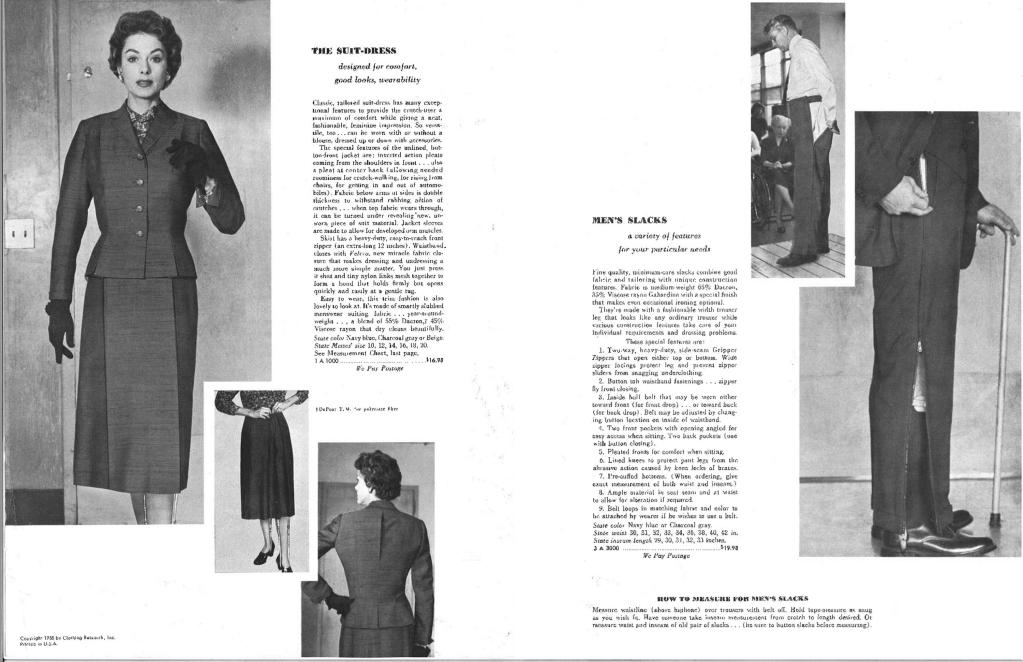
From the beginning in the 1950’s, adaptable gowns were born out of necessity and were mainly associated with hospitals that saw an intake increase during and post the Second World War that left both wounded and impaired patients. It all changed when Helen Cookman, one of the most regarded designers of the time, in a collaboration with the New York University Medical Center and Muriel E. Zimmerman, wrote a book titled Functional Fashions: A Guide for the Physically Handicapped in 1961, when the term was still taboo. She went on extensive research with the Physical Medicine and Rehabilitation unit, which received numerous letters and requests from patients and relatives asking for assistance. Special designs were made to aid the daily difficulties experienced by them, like the dress bottom or skirt model that had front and side openings for easier access and buttoning. On its official release in 1961, more than 35,000 people rushed to order, leading Virginia Pope and Cookman to found the Clothing Research and Development Foundation in 1962.
Later on, adaptive clothing steered away from its strictly medical labelling as brands like Unhidden, The Able Label, and Intotum that specialise in adaptable gearing like adjustable coats that are suitable for wheelchair users, dresses with velcro openings, and jeans with hook zippers, amongst other items. It was only a matter of time until major labels like Tommy Hilfiger and Anthropologie came out with their own adaptive lines that incorporate similar designs without losing their DNA and heritage in a higher price range, just as Asda, Primark, and Amazon enter the market at a lower price. It is a new era for fashion, one where brands are concerned with making clothing with hypoallergenic fabrics and opening quality checking facilities with specialists in the sensitivities of all kinds. Although now more than ever, there are alternatives of all prices available in the West, these initiatives were born out of a desire to improve and have clothing that is not only wearable but beautiful.
For Thirza Phillpot, who experiences hyper-mobility that has affected the biomechanics in legs and feet, making it uncomfortable to wear ordinary shoes, “To be as comfortable as possible, I have to find extra-wide shoes. Generally, on seeking advice from the NHS or MSK people for sources of extra wide shoes, they direct me only to booklets of companies that supply very wide shoes for diabetes sufferers whose ankles swell, and therefore these shoes are not appropriate for me,” she shares. “The shoes available to me from the magazine were mostly really ugly. So unattractive I couldn’t bring myself to get them,” she added. This is an issue that many people faced for years, as adaptable clothing carried the stigma of only being required to be useful or comfortable, not yet stylish, something Rosa Maria Braz Genova, a lifelong fashion lover, related to.
Limitless yet Unreachable
While much has been done when it comes to the development of adaptive wear, which now, more than ever, has separated its identity from strictly hospital-grade clothing and become more stylish, there is an evident issue with the affordability of these kinds of designs that are often quite expensive when compared to high street fashion. A recent study done by the Research Institute of Disabled Consumers showed that 36% of disabled people find adaptive clothing expensive, a common response for a public that is charged £40 for a backless top made of heavyweight jersey material.
The narrative stated by most brands is that the alterations needed to make an adaptable piece would cost more to be produced, since the extra tools like zippers and velcro would cost more than buttons or other usual materials used. This just excuses the usual behaviour of excluding this community and a huge chunk of the market that urges to have its necessities met once, and for all, when these needs are not met, they have to turn to what is already available, which tends to be neutral pieces that focus mostly on comfort and lack creativity or style. In the end, a monopolised market is set to continue the never-ending circle of exclusion and charge astronomically high prices for these pieces.
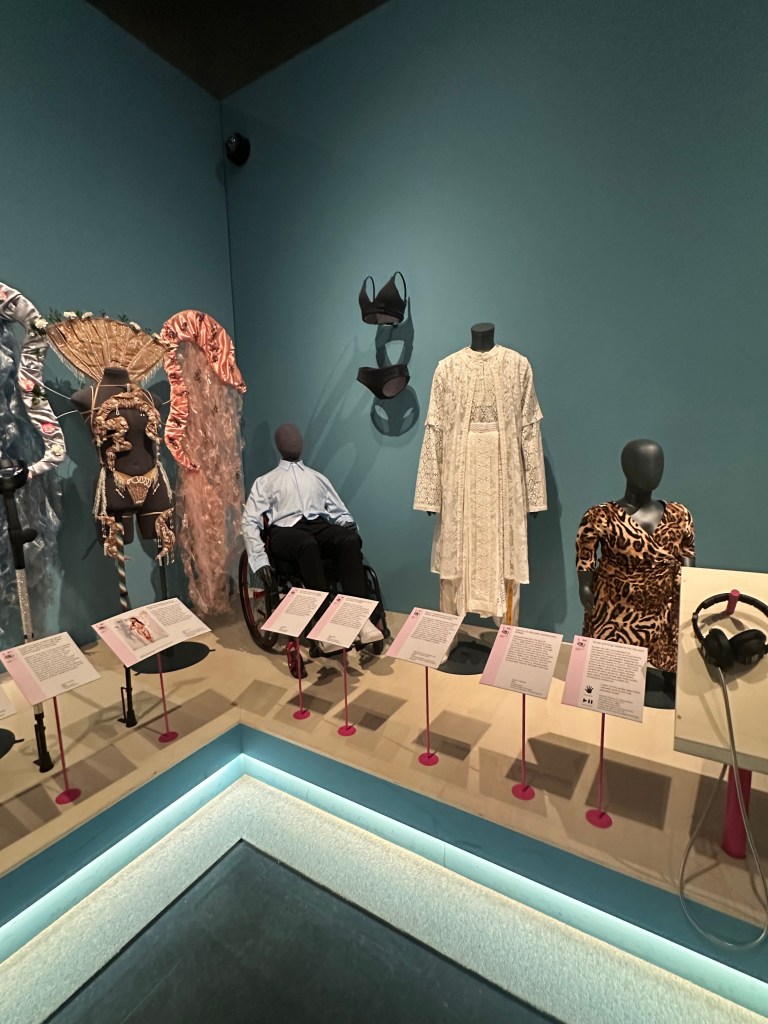
The hospital-grade special gear is expensive as it carries the medical expertise, but it also degrades the experiences of millions of users who have their sense of style and personality affected. These special devices also came with a hefty price tag, which made them inaccessible to many. “When I was really struggling financially, I could not afford these and just rather unhappily wore stuff I could afford like flip flops from Poundland”, says Phillpot.
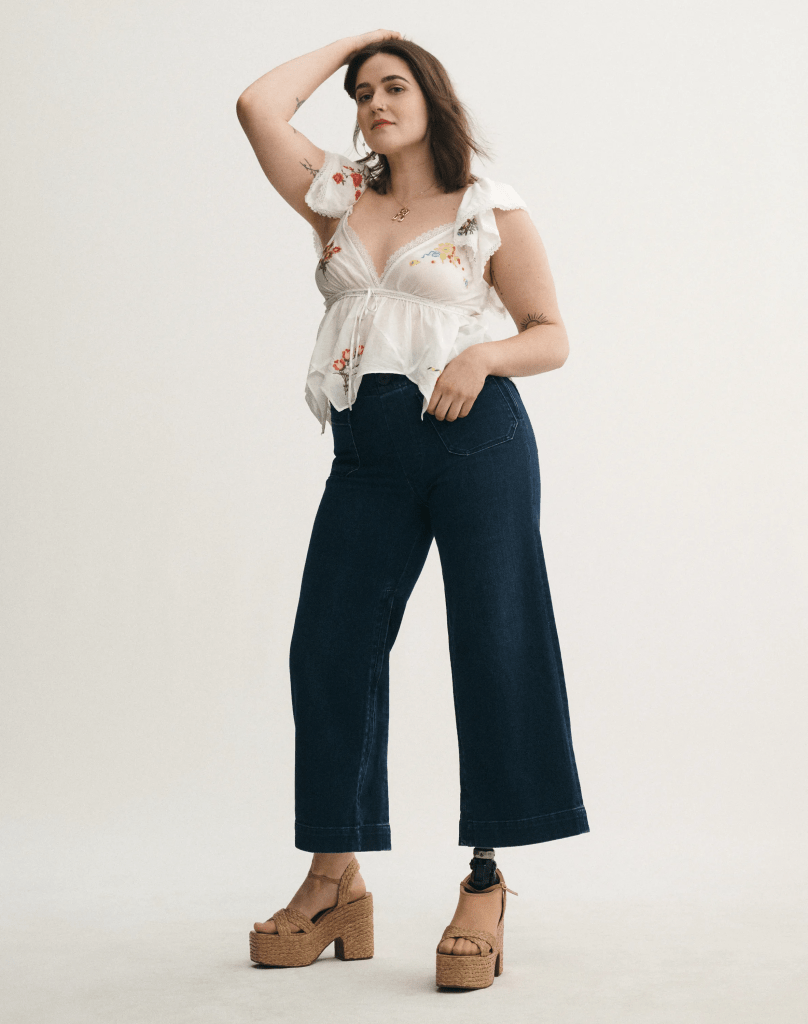
After much protest and requests, other fast fashion brands like Anthropologie have added a range of adaptable attire. With a price range from U$26 to $398, which is quite similar to other collections and fitting reasonably in the affordable accessible market. The issue comes when you check the brand’s UK website, which has a significantly lower number of options, with only two pieces in comparison to the 59 different garments available for purchase at their US and Canadian websites.
There are indeed cheaper options available in supermarket chains like Asda, with its George line that features options for as low as $4. Noah Robin, a 20-year-old content creator, has experienced some of these issues and raves about adaptive wear, “I struggle a lot with getting dressed both physically and from an energy perspective, so adaptive clothing makes a big difference to me. I also struggle with dexterity, so buttons are really hard, so I have a button tool that’s really helpful. Clothes and wheelchairs are a big problem; some trousers just don’t sit right, and I can’t reach the pockets because they’re in the corners of my sideguards, flappy jackets get in the wheels, it can be a bit of a nightmare, honestly,” they shared.
Without a doubt, the most requested items in the 49 piece Primark adaptive range were the modified tops and bottoms made for wheelchair users. A long time coming result after so many years that has left Amy Silverston quite intrigued “They have an extensive range of clothes for people in wheelchairs that look rather good, e.g. the men’s zip up fleece that is short enough not to get punched up when sitting. I will certainly go and take a look next time I am on Oxford Street. I believe the quality of Primark clothes is not always that good, but it’s very cheap, so worth considering. With those prices, they could corner the market,” she mentioned.
Much experienced in the field of adaptive fashion, Silverston has seen a great deal of change in the industry ever since she found herself being guided towards adaptable clothing. “I have secondary progressive multiple sclerosis. It has affected everything. My legs do not work, so I am permanently in a wheelchair. I have very little manual dexterity left. A carer has to dress and undress me, therefore I need clothes that can be put on and taken off by someone who is sitting down in a chair. In terms of practicality, this means access to things at my back is limited. Try putting on a jacket whilst sitting in a chair with your back against the back of the chair. You want to stand up or at least put your legs on the ground to stabilise yourself and shuffle forward to the edge of the chair. I can’t do that. Then do it with arms that do not want to lift up over your head and don’t straighten properly,” she said.
Evidently, she has seen it all when it comes to appropriate apparel and is wise enough to share her greatest finds, mostly from Able2Wear, like a “Fleece poncho for wheelchair use in slightly chilly weather. Much longer at the front than the back, so it does not bunch up behind you, but keeps your body warm at the front as far down as your knees,” or a “Mobility Scooter Poncho. A clever and incredibly cheap equivalent to a cagoule for someone in a wheelchair, £15 from Argos. Good for putting on clothes when what you need is something water and windproof,” she shared.
But sometimes she even finds herself giving a product a less kind review, “The waterproof cape with fleece lining, supposedly for warmth. A ridiculous item, it is only elbow length, so your arms get cold and wet. I had to get a pair of waterproof, fleece lined arm covers made to go with it that cost about £35. They claim on the website that it can be worn over the fleece poncho, which is at least a foot longer.”

Another popular shop that entered the scene in the last 30 years was M&S, with a dedicated team working on post-surgery tops with their Fashion Targets Breast Cancer line that has helped raise more than £15 million for Breast Cancer Now charity. Not only a noble cause, but this effort also helps thousands of people in the UK who struggle during a treatment that takes a certain toll physically and mentally.
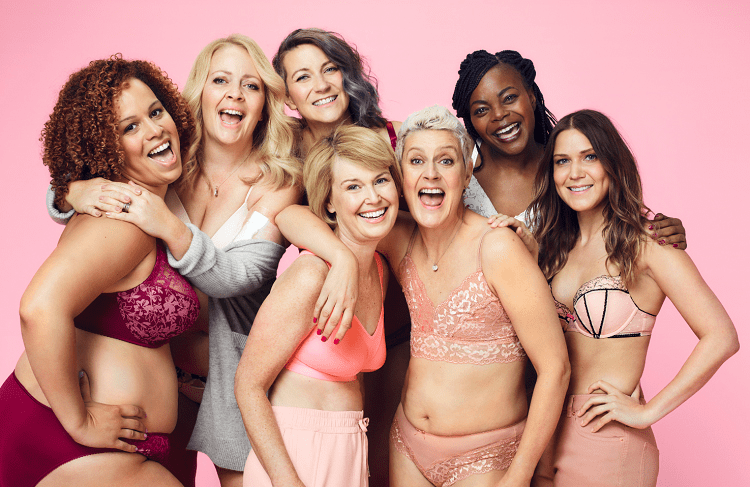
Thereza Cristina Sandrini, a survivor who had to battle with the disease for over 27 years, shared just how difficult it was to find clothing in her post-operative stages, “I found out about my health problem at 21 when I was pregnant with my son and moving into the third trimester. The diagnosis was cancer in my uterus, stomach, liver and a part of my intestines. After I had my son, the treatment began. My first surgery was a gallbladder removal that took 10 per cent of my lungs and 5 per cent of my intestines, which, paired with my recent postpartum body, made the scars in my lower stomach evident”.
I couldn’t wear trousers with elastic waistbands, because they felt too tight and scratched my scars, or anything made of cotton, because it would make me too warm and sweaty, which made my skin itchy. I had to adapt my clothing to my needs because my normal clothes would get caught on my stitches, which at the time were still fully external,” she shared boldly.
“In 2012, I experienced one of the most difficult times of my life when trying to find a dress for my wedding that was not only comfortable but that fit over the belt garment I had to wear. We decided to go with a corset-like dress with a higher back. Shoes were still an issue since, at the time, there were no orthopaedic shoes that didn’t hurt me, so I bought the most comfortable pair, and yet they only caused more trouble after one of my pins slipped out of place because they were not comfortable enough. Looking at the pictures now, I am not pleased with the results because that was not what I wanted. You dream for years and years, planning for the most important day of your life and in the end, I did do my best with what I had at the time, but I was not what I wished for,” she continued.

When it comes to designing, fashion courses have certainly made an effort to solve the issue with the limited amount of learning materials in colleges and universities that focus exclusively on accessibility and adaptive fashion. But even if the subject is mentioned and considered by lecturers, there is not enough training provided in these courses because of various reasons, such as the smaller size of the market that adaptive gear occupies or the expenses that follow it. This is addressed by James Hunting, senior lecturer of Fashion Textiles and Deputy Head of Design at London Metropolitan University, who mentions the importance of incorporating these ideas into the curriculum.
With a new generation of designers and fashion professionals entering the industry, there’s much to be adjusted everywhere. From design to stores, there is often an issue that goes beyond paper, as many shops are quite inaccessible, especially for wheelchair users, who deal with lifts out of order, shopfloors with narrow, limited space, items hung too high and beyond reach, all resulting from a lack of proper planning from visual merchandisers and store planners. An evitable mistake that can disturb the experience of customers like Rosemeire Maciel da Silva, who has to live with similar issues as a wheelchair user every time she shops for a new wardrobe.
Like other tens of thousands of survivors, Rosemeire contracted the polio virus at a young age and was left wheelchair bound ever since. In Brazil, where she is from, the virus has been officially eradicated since 1985 after a massive vaccine campaign, as the country had once registered the highest number of cases ever in 1975, with more than 36,000 patients reported.
Media, Diversity and Representation
In the last decade, a new wave of activism and calls for representation came in various forms, guided by the popularisation of social media that has officially made its way into the average person’s life. Social-political movements that spiked awareness and major change, like Black Lives Matter, which highlighted police brutality and racism, Stop Funding Hate, which took action against the anti-immigration in British media and the Ice Bucket Challenge that helped fund more than $115 million to the ALS Foundation in 2014, to name a few. As the major population embraced the internet and discovered the power in having a platform to voice their opinions to a broader audience, discussions about the lack of representation of plus-size and disabled bodies in the fashion industry became a popular discussion online, with millions of users across websites condemning the actions of brands that never cared for their business.
Oftentimes, many people tend to believe that fashion is about bodies, but this is no more than an understatement. Fashion is Art, it is craftsmanship of the highest order that connects souls to physical matter that transcends time itself. If love is in the details, fashion is in every seam just as much as in each student, weaver, seamstress and buyer. By taking away the opportunity of people of all body types to be represented by models at fashion’s most important shows and advertisements, the industry sends a message that they do not value those who do not meet their standards, which are historically not diverse.
For content creator Luke Mantle, who was born with Congenital Diaphragmatic Hernia, which left him with a collapsed chest, the act of making videos as his drag persona Taya Mwah came as a way to channel all of his creative interests into one place. Recently, he found great success after going viral for a humorous video of him placing a shiny speaker in his chest dip that got him 11.2 million views and thousands of comments. Not just an overnight sensation, Mantle shared how he got the idea and the effect it had on his life.
When asked about his feelings regarding a correcting surgery he was clear that he’s not interested since his doctors advised him, “If you get it done, it’s gonna be purely cosmetic now, and I don’t really care for it”, he explained, “It’s a weird way to look at it but if I asked you, Do you wanna get rid of your arm?’ you would say no. I have a weird attachment to it, so I don’t care” he continued. Having a platform where you can see people just like you living and performing is essential; it takes the stigma of a condition and shows that there is an enjoyable life for a being that can be just as creative and professional as any other.
A historical sight, famous accessibility activist and founder of Tilting the Lens, Sinead Burke, sparked significant change during fashion’s biggest night of the year by ensuring, for the first time ever, that there was a wheelchair friendly route through the famous 63 steps that lead to the Metropolitan Museum of Art. In collaboration with the Costume Institute, Burke helped design a route through the 81st Street Door that would be suitable for anyone that could not walk the steps but wanted to be included in the red carpet as “The stairs leading up to the Met is a constant and very visual reminder that for many Disabled people, the Met Gala is not for them,” Burke said on an email as reported by Forbes, “I would like to work with you to see if a solution can be found to ensure that Disabled people can attend, or at the very least, aspire to attend” she added.
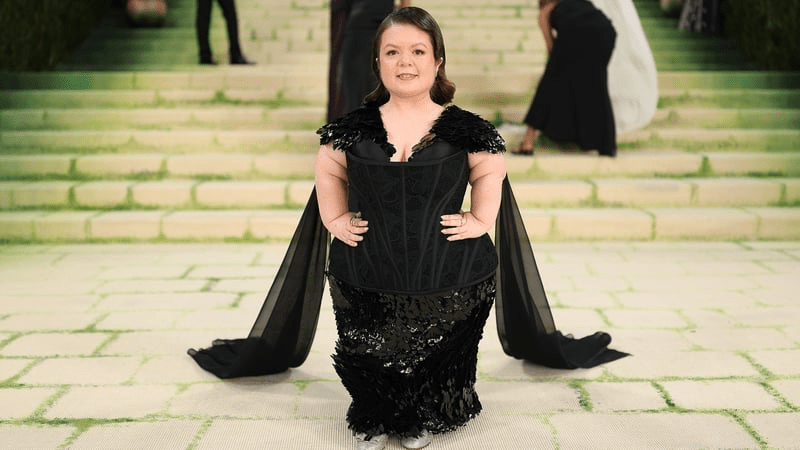
In a rather sad era of what feels like the death of physical media of all sorts, printed magazines have seen a significant decrease in production as many titles like Glamour and Marie Claire are going fully online, and others are following with online exclusive versions of their monthly issues. Since May 2023, British Vogue has taken a step towards accessibility by producing its first braille version of its print magazine, which is still offered in every release ever since, per request on their email, as well as an audio one available online on their official website. This has become a norm in classic titles, but has yet to make it through younger magazines that focus on an entire digital business that relies solely on online tools like large lettering and audio description. Many titles are available from all genres; sadly, out of the 26 braille options offered by the Royal Institute for the Blind, none focused on fashion.
With the rise of AI-made marketing campaigns from Balenciaga and Gucci, there is evidently yet a new method of replacing real models made of flesh and bones and as the skinnier bodies trend resurfaces, the outcome does look concerning for digital marketing and representation.
Artificial Intelligence Impact
The recent development of Artificial Intelligence-powered tools has sparked massive change and controversy around the veracity and accuracy of its results, besides the clear fear for future employment opportunities in creative and artistic fields. Shivani Sundar, a design strategist and AI product designer, understands the machine’s power but assure humans maintain control over and should make good use of it as “AI can aid accessibility in multiple ways but we, as humans, should teach AI what accessibility means; AI could auto translate complex speeches real time, Meta AI glasses could inform a blind person on what they can’t see, AI can help you tailor emails to audiences who have specific tonal preferences and AI can help improve productivity, remove repetitive tasks, improve decision latency in multiple industries.”
Nonetheless, tools like the BeMyEyes app that connects more than 9 million sighted volunteers worldwide to blind and low vision people worldwide through a simple call, can help someone’s life and ease the daily issues with tasks like dressing themselves or doing their makeup. In the beauty sector, this has been seen in devices like the Colorfeel by Bruna Tavares that audibly describe shades of makeup products to best assist in someone’s routine.
Even though there is a sense that AI will take over our lives soon, when it comes to art, there is a clear boundary it cannot cross, as the computer has yet to learn how to replicate something only humans have: true passion. It certainly is what motivates James Hunting, who has seen all kinds of tools and changes introduced into the fashion industry, but guarantees that nothing is better than the simple human touch.
Design and Disability Exhibition
As one of the main fashion capitals, London is famous for holding many of the most interesting and coveted events year-round. After the opening of the Victoria and Albert Museum in 1852, the museum has now become one of the most important state-of-the-art galleries in the country.
In 1913, a new chapter was added to its rich history as it welcomed the first fashion-focused exhibition of Talbot Hughes’ English Costume, a predecessor for a much more successful future that carried through the years in different showcases like the Design and Disability exhibit that ran from 27 June 2025 to 15 February 2026. Featuring an impressive array of work by disabled designers, painters, filmmakers and activists, the museum helped raise awareness for the reparable issues that the world suffers from when it comes to accessibility and the lack thereof. There was certainly something for everyone.
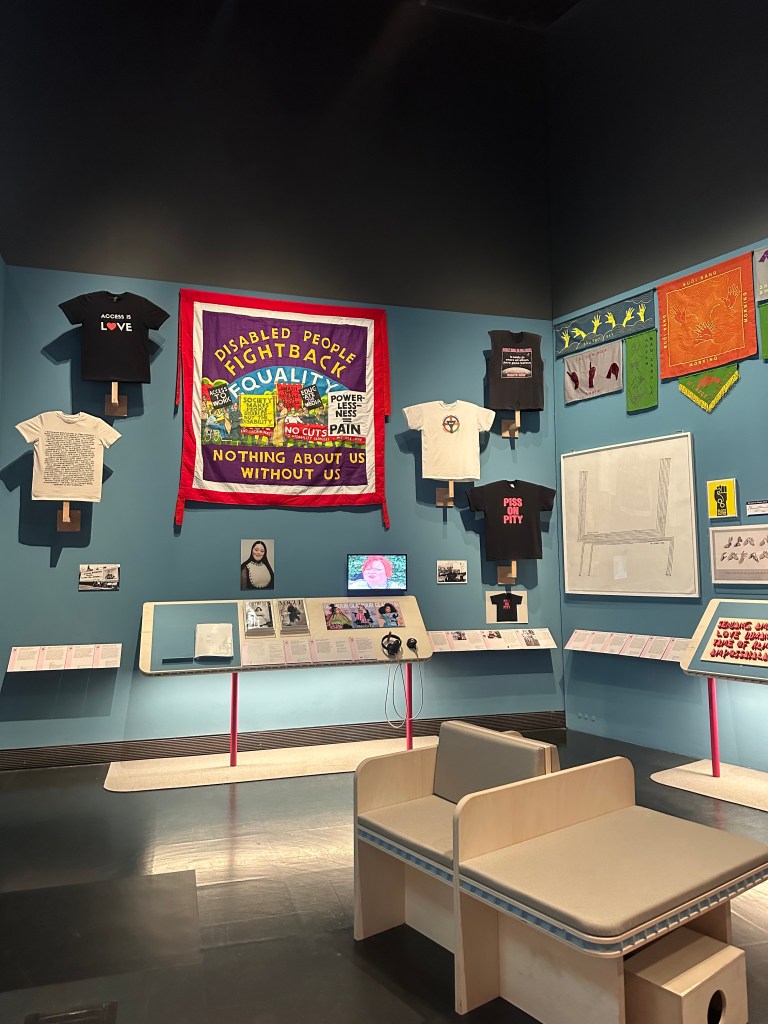
Shivani Sudar shared her unforgettable highlights: “I recall seeing a wooden storage box that was attached to the wall of the kitchen with a mechanism to open and close. The idea was to store onions and potatoes in a shelf which opened and closed right next to the cooking area. I thought that was a novel and interesting idea, especially for shorter individuals.”
What was interesting was to see how the showcase layout differed from other exhibitions that did not particularly focus on inclusion, like the Schiaparelli: Life Becomes Art show that replaced the exhibition in March. The crowd was certainly impressed with its beautiful gowns and insightful information, but the lighting work and the small print left a bitter taste in some visitors’ mouths.
Supply and Demand
At its core, marketing revs off the emotional and psychological effect it has on consumers, and the relationship between time could be considered an almost unilateral union of interests. It’s basic economic facts, if the demand from consumers is up, the production will rise, but if the demand is down or the market is deemed not as profitable, the production is slowed down, and prices skyrocket. In the luxury sector, the rule is to profit from the quality of materials and craftsmanship, with a low amount of products produced that are valued in the highest price range, as they are deemed exclusive.
This is studied by professionals like Dr Nastaran Richards-Carpenter, a Senior Lecturer and Course Leader of Fashion Marketing and Business Management, who says there is “No way you can separate marketing from psychology, particularly when it comes to fashion and luxury” and explains the process of neuromarketing.
While the reality of many may never influence the lives of those who do not cater to them, there is an absolute amount of responsibility that this industry carries to create and serve for all, as long as there is a need for it. But from a business standpoint, is there a high demand for adaptive fashion at the current state of the market? The Primark adaptive line, designed in partnership with designer Victoria Jenkins, is a prime example of a high street brand that is not only able to mass produce and sell this type of modified garments at a wide range but also does so at an affordable price.
From a producers point of view, the consumer demand has to exist in order for production to stay active, which presents itself difficult when the dilemma is need vs want. If the public wants it there should be a need, but it’s not as simple as that, since at that time the avid consumer instigates changes that would mean an increase in cost to maintain product viability. Besides maintaining a consolidated relationship with producers and suppliers in the luxury sector, Lise Edwards-Warrener has worked in different areas within the fashion industry in her 25-year career.
Before landing in her current role as Vice President of Ready to Wear Operations & Supply Planning, she explained the complexity of this issue and guaranteed that “Nothing’s impossible. It’s all possible. It’s just, it’s the time and the inventory of raw materials as you’re trying to find an efficient way of doing it. And if it becomes a modular thing where you sort of just build something, it’s probably not going to be as comfortable or as aesthetically pleasing because that’s the whole point of the exercise, to actually be more inclusive,” she shared and explained the ways this has been done previously.
Although it is understandable, the argument that there is no demand for adaptive fashion, therefore no need to produce it, is simply reducing and unfair; it excuses the lack of interest from brands and reduces disabled people to a second plan and transmits the message that they are not valued by the fashion industry, therefore making an entire community feel unwelcome. This would cause an immense impact; we could risk losing an entire wave of creative artists, designers and consumers that are meant to be valued just as much as anyone else in a world that is often unkind to their needs. Accessibility is not a trend but a necessity, a demand that has long been fought for when it should just come directly from a willing desire for inclusion.
At times, this community feels as if it is being heard but not seen, floating in a sea of excuses and forsaken promises of a bright and accessible future that never truly came. By producing a collection of basic pieces that are not available for purchase in every store, many times only on a website, companies reduce and limit individuals to bland senses of style that not only diminish their personality but causes insecurity and creative impediments.
By allowing disabled professionals in designing, producing and retailing there is a chance of giving power to this community and solving this issue by using tools that are often already available and go unnoticed by others that are not actively needing special adjustments but could benefit from them in the future. There is a clear, viable solution to make fashion available for all, which is to ensure that professionals specialised in accessibility are included in all processes, from disabled designers to plus-size models and all in between. Until the fashion industry is accessible to all, it will remain unreachable to the masses that finance it.


Leave a Reply